Monday, June 1, 2009

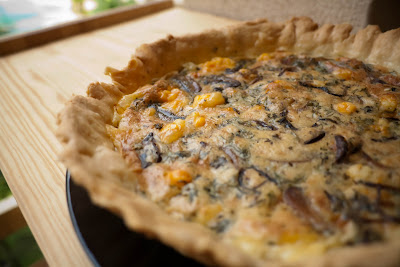
Spring Onion and Cheese Tart


This is a recipe adapted from the Spinney's Food Magazine. It may not look as appetising as on the magazine...but I'm sure it tastes much better, if not same!

For this you will need Fresh Spring onions
A block of Goat Cheese ( I couldn't get hold of Goat Cheese, hence used Feta Cheese)
Puff Pastry sheets
Olive oil
ground cumin
ground fennel

Firstly preheat the oven to 180 degrees C or 350 degrees F.
Prepare the Onions by cleaning them and trimming the roots off. Try and keep the stems similar in length.
Steam them for 7-10 mins or until tender.
Next you line the pastry sheet on a greased baking sheet. Crimp the edges of the pastry sheet. Prick the surface with a fork all over. Slice thin slices of the cheese and arrange them on the pastry. Next arrange the spring onion stems over the cheese.
Brush with Olive oil and sprinkle the powdered cumin and fennel.
Bake for around 30-35 mins and serve hot from the oven.

Wednesday, May 6, 2009

What's in a name???

Like mentioned in my earlier blogs, I have been working on my baking. And i bake regularly now. So I'm getting there....inching my way to a being a perfect Baker!
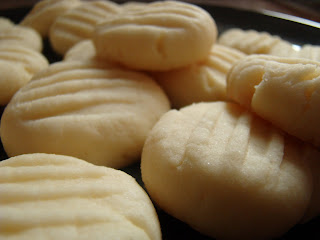
Recently I made these lovely biscuits,orginally inspired from a baking book . They were called Melting Moments, However since I improvised on them and tweaked the recipe a little, I'm taking the liberty of naming them 'Snow drops'...chessy and corny but my own name!
Anyways lets get to the details of getting it done.
I used a cup of softened butter, approx 250gms.
1 1/2 cups of plain flour
1/2 cup of cornflour
1/2 cup of icing sugar
1 teaspoon vanilla essence
150ml milk
Preheat the Oven to 350 degree fahrenheit.
Start off by beating the butter, icing sugar and vanilla essence.beat till the mix becomes light and fluffy.
Next stir in the combined flours, preferably in two batches.
Mix the dough well. Add a little milk , till the dough resembles a consistency where you can roll out balls.
With lightly buttered palms roll out small balls. Press them down , 3-4cms apart on a baking tray.
Flatten them and bake in the moderately slow oven for about 15mins. Stand for 5mins before taking them off to cool.
And Voila!!! our Snow drops are ready to melt...Snow drops or Melting Moments....tastes wonderful anyway.

Wednesday, February 18, 2009

You can't go wrong with it...


With Valentine's Day past us, it might seem a little inappropriate to share recipes involving chocolate and cream. However I feel there is really no time, season or day you cannot relish and treat yourself to a modest helping of sweet, rich chocolate. And the  best  part is you can never go  wrong with chocolate.  Short notice, no time, no fancy ingreidients...do not fret . This simple and lowly recipe produces stunning  outcomes.  Read on and you will know.
This recipe was handed down to me by my lovely ‘chocoholic’ Sister.
Rum Balls have always been her weakness and when she shared this quick rum ball preparation, I just had to make it. 

All you need is 
 1 cup of crumpled chocolate sponge cake
½ a cup of semi sweet cooking chocolate
50ml (quarter cup) of cream or unsalted butter
½ a teaspoon of dark rum
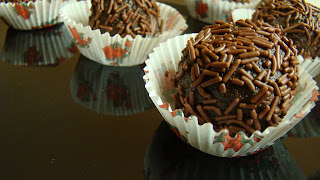
And lastly for the fancy look, some chocolate vermicelli.
After you have melted the chocolate and cream/butter . Mix the cake ,chocolate-cream mix and rum and divide into small balls. Roll them in chocolate vermicelli and place in a paper muffin cup. Refrigerate before serving. 
And there you have the most sinful Rum ball. Dig in!!!

P.S. While melting chocolate and cream/butter , make sure you do not burn it. Melt it in a water bath or using the setting provided on your Microwave.


Sunday, December 28, 2008

It is a New Year again


Hello all who missed my new entries...and also to those who didn’t realise that I took a long sabbatical from blogging!!! No hard feelings you see…moreover at the fag end of this long and trying year.
So its that time of the year when most of the orthodox souls like your’s truly starts thinking up of ‘Resolutions’ to make… (not necessarily keep) for the coming new year. For this year I have just one and that too…quite an achieveable one. So my resolution for this coming New Year is…No no….Not to lose weight, on the contrary in a way to gain some more….I mean I am going to learn to bake!
So will keep you all posted with updates.
I have this real quick and simple, yet yummy candy for you all to try out.
This is one of my sister’s many superb recipes. There might be many with similar procedures but this is the one I have tried and loved.
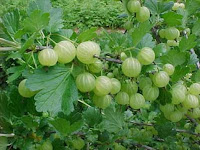
This one is Candied Amla, or Indian Gooseberry.
Firstly you need to steam the Amlaas, until they crack. Then keep them out for a while and wipe them clean. Try and make them as dry as possible. Then transfer them to a clean n dry container. Pour in pure honey so as covering all the berries.
Keep them soaked for almost a fortnight. Make sure to shake them or stir them daily.
Then transfer the berries onto butter paper or to any dry flat container. Dry them under the sun daily for another 5-7 days. If you like it tangy you can sprinkle some Chat masala or Amchoor (dried mango) powder.
Guaranteed not to last too long in your tins!

Sunday, August 10, 2008

Not just a ship in the desert

A taste of wedding tradition (appeared in The National; 10th August, 2008)


“The maidens commenced throwing the camel’s flesh into the kettle.“The fat was woven with the lean like loose fringes of white twisted silk.”So reads an ode by a sixth-century Arab poet.
Imru al Qais, the bard of the pre-Islamic era, had killed his riding camel to impress a group of women bathing at the Darat Juljul spring. Qais’s generosity was for a special occasion and, 15 centuries later, the animal’s meat is still regarded as a delicacy.The wedding season has begun and the demand for camel meat is on the rise. At markets, young camels are being eyed up by buyers trying to decide whether the young beasts are fleet of foot or best suited to the dinner table.
In the world of the camel aficiando, “fast” and “food” are two words that rarely belong together.An Emirati wedding involving a massive banquet would have several camels roasted whole. They are served on huge platters heaped with basmati rice spiced with saffron and other colourful herbs.In dining halls with room for more than 500 men, the camels are served only to guests of honour. The rest are given roast mutton.
Mofeed Abdul Rahman, the manager of Al Dhafra Tourist Village restaurant, will be busy throughout the summer catering daily for marriage festivities.“The number of whole camels depends on how many VIPs there are,” says Mr Rahman, as he stands next to an electronic oven, which takes at least six hours to cook a whole camel. He says the average number of camels at wedding feasts was three or four.Ahmad Ali, a chef from Yemen, says: “It’s part of tribal traditions. The man would be proud to kill several camels [for food].”
Mr Ali works at the Saudi Kitchen at Port Zayed and he has spent the past 27 years cooking traditional Arab food in Saudi Arabia and the UAE. In this kitchen, however, he started cooking camel meat only five months ago.Wedding caterers are not in short supply, but in Abu Dhabi a camel-meat lunch box delivered to your home is a rare commodity. The Saudi Kitchen sells fewer than two dozen a day.Mr Ali prepares the meat either by boiling or roasting it in the tanour, a wood-fuelled oven shaped like a barrel.
In this oven, the chef wraps the meat, usually with vegetables and green chillies, in aluminium foil and leaves it to grill in the heat of a flameless fire. The flames die down when the tanour’s lid is shut.In Mazyad market, on the outskirts of Al Ain, the scene is different. Groups of men struggle to force camels into pick-up trucks or lorries. The kicking and groaning camels finally stop resisting when they find themselves aboard the vehicles. For many of these animals, it is the beginning of a short trip to the slaughterhouse.
A camel destined for meat costs from Dh1,000 (US$270) to Dh4,000, the price determined by weight, which is usually estimated without scales. Musallam Selmi Atiq, of the Rashaida tribes in eastern Sudan, normally sells two or three camels a day but can sell as many as 15 in the wedding season.“People prefer young camels when they have a private feast, but if they want to give out meat, they buy bigger camels,” says Mr Atiq, who had 15 camels on sale, most of them under three years old.
Abdul Aziz bin Salama, 18, drove from Abu Dhabi to buy camels for a family banquet. He bought two, one for Dh900 and the other for Dh1,200. “We love camel meat because it’s an old habit. It’s healthy and is mentioned in the Quran,” he says before driving off behind the lorry transporting the two camels. The market is dominated by Sudanese men who hail from tribes that specialise in raising camels and other livestock in areas such as Kasala.
Mr Atiq has been dividing his time between Sudan and the UAE for the past 16 years. He is 41 and has seven children aged from two to 17. “I have been dealing with camels since I was very little,” he says. The tribesman can effortlessly reel off dozens of words describing the life stages of a camel, from birth to the end of its life. Other words describe the animal’s breed and physical appearance.
Most of these words can be found in classical Arabic dictionaries. The camel has fascinated Arab poets through the generations. Linguists, for their part, wrote passionate and elaborate descriptions, with one treatise compiled in the ninth century wholly dedicated to defining words related to the species.The dusty market, near Jebel Hafeet mountain, is divided into several sections. In some, camels are on display for their breeding potential, while others are shown for their beauty or racing ability.
Emirati men, many in four-wheel drives, circle the market in the hope of spotting a camel which, after prolonged training and grooming, could earn them a fortune.Others, such as Abdullah Salem, a 25-year-old Emirati from Al Ain, come to sell a specific type. His commodity is a beauty beast, a model camel that could enter the annual camel contest and be sold for thousands, if not millions, of dirhams.
Mr Salem does not have the camel tied by its hind legs in the back of a lorry. Instead, he shows prospective buyers a digital picture of the animal saved on his mobile phone.Racing and beauty camels can be notoriously expensive. But neither are commonly found in the Al Ain souq. This is a venue for amateur treasure hunters.“It happens about once a year that I spot a racing camel. I buy it and sell it on,” says Mr Atiq. “It should be nice-looking and slim. To test it, I make it run to see how fast it goes.”
Mr Atiq has in his stock three types of camel, based on their colour: Hazmi, dark brown or black; Omani, brown; and Asham, beige.
by Mahmoud Habboush

Saturday, June 28, 2008

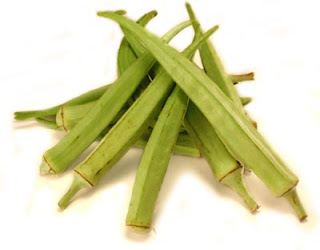
Okra all the way

This integral member of the cotton family is indigenous to regions around the Nile in North Africa and the Middle East for it was discovered dating as far as 3500 years ago in Ethiopia. Okra or as we commonly call it Lady's Finger, is a very versatile vegetable, and has travelled far and wide and is relished by almost everybody.
Not only is it known for its versatility and flavour, it is a mine of essential nutrients and elements needed for healthy existence. Firstly, being low in calories it is aplenty with vitamins of the category A, Thiamin, B6, C, folic acid, riboflavin, calcium, zinc and dietary fiber. Eating okra is much recommended for pregnant woman besides other for it is rich in folic acid which is essential in the neural tube formation of the. Below are some theories I happened to read online about our lowly Okra Research revelations by the eminent nutritionists' state
• The mucilage and fiber found in okra helps adjust blood sugar by regulating its absorption in the small intestine.
• The fiber of okra has many superior qualities in maintaining the health of the gastro-intestinal tract.
• It helps reabsorb water and traps excess cholesterol, metabolic toxins and surplus bile in its mucilage and slips it out through the stool. Due to greater percentage of water in the bulk it thereby prevents constipation, gas and bloating in the abdomen.
• It is an ideal vegetable for weight loss and is storehouse of health benefits provided it is cooked over low flame to retain its properties. This also to ensure that the invaluable mucilage contained in it is not lost to high heat.
• Okra facilitates the propagation of good bacteria referred to as probiotics. These are similar to the ones proliferate by the yoghurt in the small intestine and helps biosynthesis of Vitamin B complex.
• For adding bounce your hair. Boil horizontally sliced okra till the brew become maximally slimy. Cool it and add a few droops of lemon and use this as the last rinse and see your hair spring back to youthfulness and jump.
• Okra is an excellent laxative treats irritable bowels, heals ulcers and sooths the gastrointestinal track.
• Protein and oil contained in the seeds of okra serves as the source of first-rate vegetable protein. It is enriched with amino acids and other sulfur amino acids.

All right now for some tasty food to move over too…I recently tried this yummy Bhindi Masala. I guess everyone makes it, but I just tried it my own, rustic way.
You will need a bunch of Okras
Wash, clean and wipe them dry with a paper towel. Then Chop and sprinkle a little chilly powder and keep aside.
Heat oil in a kadhai, add mustard seeds along with dried red chilies. Make a coarse paste of Onions, tomatoes, garlic and ginger depending on your requirement.
Add this paste to the kadhai and cook it for a while. When oil starts to separate, add the basic masalas. Chilly powder, garam masala and if you want dash of zest, go ahead and add a spoon of meat masala too. Pour a little water, again depending on the consistency desired.When the nice spicy aroma wafts, its time to add the bhindis.
Add it and cook for while, until the okras are soft and cooked. Sprinkle some chopped coriander leaves and Voila! your Bhindi masala is ready to be devourved!

Sunday, June 22, 2008

To eat or not to eat?

Superfoods!! its the buzz word in my office circuit. With the weight conscious to the health freak stack up articles over articles and tonnes of books that would give them a key to the 'Magic foods'.
To give you a clear and easy picture to whats hot and whats not, leading American dietician, David Grotto pens down a few in his latest book. if you liked this excerpt, go ahead and grab his book '101 Foods That Could Save Your Life', published by Bantam:

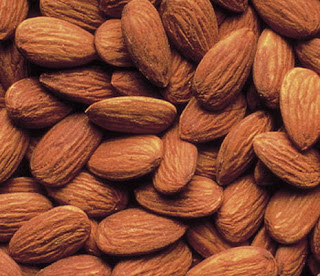
ALMONDS

Obesity: Women who'd eaten a serving of almonds had higher levels of cholecystokinin (a hormone which helps you feel full) than men did, according to a study published in the American Journal of Clinical Nutrition. So while almonds may leave both women and men with a feeling of 'satisfaction', women may stay full longer.
Alzheimer's: Mice with an Alzheimer's-like disease were fed an almond-rich diet. After four months, those animals did much better on memory tests than those fed the usual food.
Heart health: American research has found that eating almonds reduces the risk of heart disease as effectively as some statins.
Top tips: Make sure you are buying 'the real McCoy' -- many imported almonds are not almonds at all, they're apricot kernels; these look similar but the taste and health benefits are not the same. Also look for almonds in the shell that don't rattle when you shake them. Rattling may be a sign that the almonds are old.


ASPARAGUS

Digestive health: Asparagus contains inulin, a carbohydrate that is not digested but promotes friendly bacteria in the large intestine. Asparagine, a natural chemical in asparagus, encourages the body to excrete water.
Diabetes: A study reported in the British Journal of Medicine found that an extract of asparagus significantly increased the action of insulin, which helps mop up excess blood sugar.
Heart health: Just one serving of asparagus supplies almost 60 per cent of the daily recommended intake of folate, one of the B vitamins. Folate helps reduce levels of homocysteine, a substance in the blood, which at high levels can increase the risk of heart disease
Top tips: Trim off some of the bottom of the asparagus and store upright in a container with a little water to keep it fresh.


CAULIFLOWER

Cancer: Cauliflower contains a compound called indole-3-carinol (I3C) which has cancer fighting properties. Scientists have also found that the chemical sulphoraphane, found in cruciferous vegetables such as cauliflower, stopped lung cancer cells in an animal trial, and helped kill off and stop the growth of prostate cancer cells in a test tube study on human cells.
Dandruff: Biotin, a water-soluble vitamin found in cauliflower, has been shown to control dandruff.
Arthritis: A team of researchers who followed a group of women for more than ten years found those who ate more cruciferous vegetables had a decreased risk of rheumatoid arthritis.
Top tips: Munching crunchy foods such as cauliflower before bed may help stop jaw-clenching while sleeping.


EGGS

Vision: According to one study, people who ate foods high in the natural chemicals lutein and zeaxanthin had a 20 per cent reduction in developing cataracts and a 40 per cent reduction in developing macular degeneration, an eye disease that affects the retina and is more common in the over-60s. Eggs are a good source of these chemicals.
Obesity: The hunger fighting power of eggs means an egg first thing in the morning may lead to reduced calorie consumption for the rest of the day, according to a report in the Journal of the American College of Nutrition.
Top tips: Keep your eggs in the fridge and they will stay good for a month. The quality of egg protein is the highest of any whole food product, second only to human breast milk.


FIG

Skin disorders: Figs contain a substance that, when combined with exposure to ultraviolet light, was found to help several skin diseases and certain forms of lymphoma in some studies.
Diabetes: Figs are higher in fibre than any other fresh or dried fruit per serving, containing about five to six grams per portion of three figs. The type of fibre found in figs may reduce the risk of developing adult-onset diabetes (type 2) by slowing down the digestion and absorption of sugars in foods.
Top tips: The white 'frost' that occurs on dried figs is called 'sugaring'. It's caused by the sugars from the fig rising to the surface. Keep refrigerated to reduce frost.


GUAVA

Diabetes: Diabetic mice who received guava juice for four weeks experienced a reduction in glucose of nearly 25 per cent.
Heart health: Guava has been shown to markedly reduce bad cholesterol and improve the good kind and reduce blood pressure as well.
Antibacterial: Guava leaves have antibacterial properties and have been shown to have a highly lethal effect on salmonella and other harmful bacteria.
Top tips: Ripe guava bruise easily and are highly perishable. They must be eaten within a few days.


KIWI

Heart disease: Norwegian scientists have found kiwi fruit helps a component of red blood cells called platelets become less sticky.
Cancer: Eating kiwi fruit daily can protect DNA against damage that may lead to cancer. More significantly, kiwi seems to help repair the damage caused to DNA. A variety of naturally occurring substances have also been discovered in kiwi fruit that are effective in killing oral tumour cells.
Macular degeneration: Kiwi is an excellent source of lutein and zeaxanthin, natural chemicals found in the human eye. Diets rich in lutein are protective against cataracts and other forms of macular degeneration.
Top tips: The skin is an excellent source of nutrients and fibre.


MUSHROOMS

Prostate cancer: Many mushrooms contain large amounts of selenium, a cancer-busting mineral. In studies, white button mushroom extract suppressed the growth of prostate cancer cells and decreased tumour size.
Immune system: Mushrooms contain substances that may help the immune system remove abnormal cells that cause disease.
Migranes: Psilocybin, originally an extract of certain psychedelic mushrooms, is being studied for migraine headaches.
Top Tips: Don't wash mushrooms, they act like sponge and can soak up water. Gently wipe them with a damp cloth or soft brush instead.


OREGANO

Cancer: A tablespoon of oregano packs the same antioxidant strength as an apple. It also contains important phenolic acids that might prevent certain types of cancers from forming.
Antibacterial: Oregano has been found to damage E. coli bacteria and Giardia lamblia, a nasty parasite that causes diarrhoea and abdominal pain.
Top tips: Fresh oregano can be kept in the fridge for up to three days.


POTATOES

Cancer: They contain proteins called lectins, which inhibit tumour growth.
Diabetes: Potato peel added to the diet of diabetic rats significantly reduced blood sugar levels.
Top tips: It's a myth that all the nutrition is within the skin of the potato; more than 50 per cent of the overall nutrition content can be found in the potato itself! Washing your face with cool potato juice clears up blemishes.


QUINOA

Weight management: Quinoa (pronounced keen-wa) refers to the seed, about the size of millet, of the Chenopodium or 'Goosefoot' plant. It contains more protein than any other grain. Quinoa makes you feel fuller than rice and wheat, so it's good for fighting obesity.
Vaccine helper: Research has shown the potential of quinoa as a 'helper' for vaccines. Quinoa enhances antibody responses in mice.
Top tips: Be careful not to add too much water or cook it too long, since quinoa can become mushy; it takes only 15 minutes to cook.


STRAWBERRIES

Anti-inflammatory: Strawberries block the enzymes responsible for promoting inflammation in the body.
Diabetes: Strawberries help control type 2 diabetes by reducing blood glucose levels after a starchy meal.
Thrombosis: An animal study found strawberries had a powerful anti-clotting effect.
Top tips: Don't remove the stalks until after washing, or the berries will absorb excess water, damaging their flavour and texture.


TEA

Cancer: Tea contains antioxidants that help prevent certain types of cancer, such as oral, skin, digestive, ovarian and lung.
Obesity: Japanese research has found drinking green tea might reduce body fat.
Top tips: Teabag tea tends to be ground finer, providing more surface area to extract more antioxidants when submerged in hot water.


WALNUTS

Cancer: Walnuts are packed with a form of vitamin E that may help fight breast, prostate and lung cancer.
Diabetes: They might improve insulin resistance in those with type 2 diabetes.
Walnuts contain a powerful antioxidant melatonin, which promotes restful sleep. A U.S. study found eating walnuts increased blood levels of melatonin three-fold.
Top tip: Shake the nut; if it rattles or feels light it may be withered. Shelled walnuts will stay fresh for up to three weeks if refrigerated in a tightly covered container.